Categories
Archives
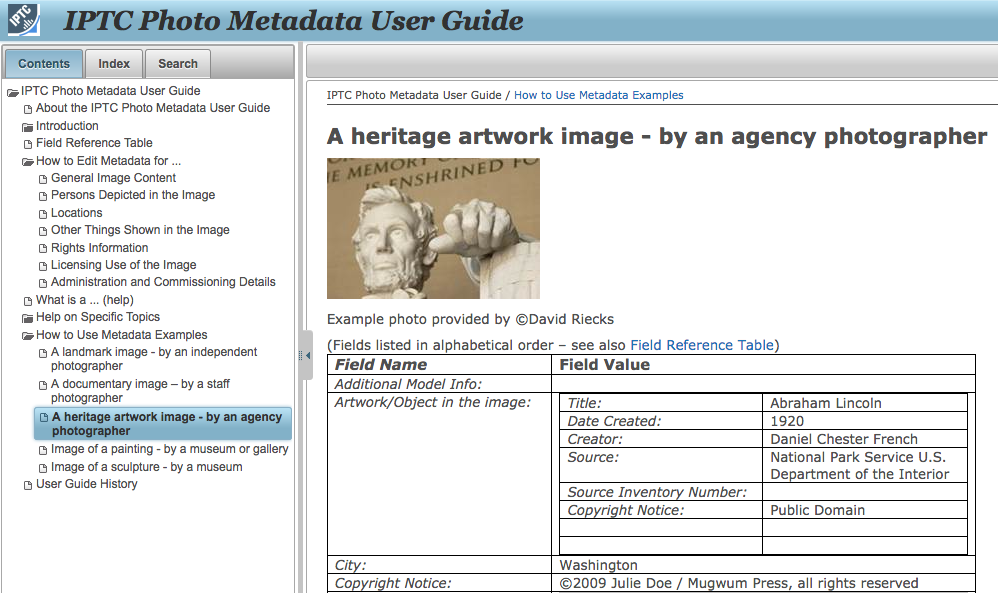
IPTC has published an updated Photo Metadata User Guide, for photographers, photo editors and professionals responsible for in-house metadata workflows, including digital asset management (DAM) systems.
Based on IPTC’s widely used Photo Metadata Standard, the new User Guide contains practical information regarding photo metadata – from photographers familiarizing themselves with basics, to managers in related businesses who have a deeper understanding of implementation of standards and metadata.
A key use of metadata is to describe the content of an image, location and rights information; the guide groups metadata fields according to information types. “The User Guide will help when deciding where metadata should be put about a certain topic, and what data should or should not be filled into a specific field,” said Michael Steidl, managing director of IPTC, and lead of IPTC’s Photo Metadata Working Group.
IPTC sets the industry standard for administrative, descriptive, and copyright information about images. The IPTC Photo Metadata Standard, supported by many software applications, is the most widely used standard because of its universal acceptance among photographers, distributors, news organisations, archivists, and developers.
The Photo Metadata User Guide walks users through the major groups of metadata, and for each IPTC field contained within each, it provides short guidelines on the use and semantics.
The first section of the guide outlines practical use for a basic understanding of applying photo metadata, and may be most helpful to photographers becoming familiar with adding it to their photos for the first time. Photo metadata is key to protecting photographers’ images, including copyright and licensing information online.
The User Guide addresses typical questions such as:Â
- What is a minimum set of fields to be used?
- How is metadata preserved?
Five examples of metadata for independent, staff, and agency photographers plus images of artwork are given.
Photo metadata is also essential for managing digital assets. Detailed and accurate descriptions about images ensure they can be easily and efficiently retrieved via search, by users or machine-readable code. This results in smoother workflow within organisations, more precise tracking of images, and potential for licensing opportunities.
For professionals responsible for in-house photo metadata workflows and DAM systems, all IPTC metadata fields in the User Guide have been grouped by topic for easy reference: general description, persons, locations, things shown, rights and licensing information, and administrative data.
The User Guide does not focus on the user interface of a specific software, and will be updated regularly to include more details.
For questions about the Photo Metadata User Guide or about becoming involved in IPTC’s work: Contact us.
Twitter: @IPTC
LinkedIn: IPTC
At our three-day summer meeting in Stockholm, 13-15 June 2016, about 30 IPTC member delegates and 10 invited experts networked and discussed emerging issues and challenges affecting technology and the news industry.
Thanks to the several news agencies and vendors who gave examples of IPTC standards as the backbone of their news exchange systems and products:
Mittmedia about its use of APIs, automated creation of text news by text robots, and data-driven journalism; Profium on the use of multicast; VG on integrating newsrooms with product and technology; Infomaker on its Newspilot publishing platform; Swedish news agency TT on their Toolbox and development of digital content, strategies, and new business; Sourcefabric on its Superdesk publishing platform; Journalism++ on robots – when, where why to start; Fotoware on its digital asset management software FotoWeb. Special thanks to Johan Lindgren and TT for helping us navigate Stockholm, as well as coordinate these presentations.
We approved SportsML 3.0, a major upgrade of the premier open standard for sports data, and NewsML-G2 version 2.23 to further refine the most widely-used standard for representing news and events across all media types.
We also talked about ideas for marketing the IPTC and ways to grow our membership. We will increase our discussion of relevant news and events, as well as information about how the IPTC’s work is applied by news companies every day. We plan to produce more hands-on information about photo metadata as, judging from the traffic to our website, that’s something a lot of people are looking for.
A new and exciting way to get involved with the IPTC is EXTRA: The EXTraction Rules Apparatus. We received a grant from Google’s Digital News Initiative to build and freely distribute a multilingual open-source platform for rules-based classification of news content. If that sounds interesting, then get in touch to learn more.
Please consider joining us for our Autumn Meeting in Berlin (24 – 26 October 2016), which will feature a video workshop day, on 25 October. We plan to launch the Video Metadata Hub recommendation, a single set of video metadata properties covering the entire video workflow, including mappings and guidelines for many existing video standards.
If you have any questions about the IPTC or our Berlin meeting, please contact me at chair@iptc.org. I will be happy to discuss the benefits of becoming involved in IPTC or attending our meetings.
Regards,
Stuart Myles
Chairman, IPTC / Director of Information Management, Associated Press
Stockholm photo: Jill Laurinaitis
IPTC develops and maintains a rich set of standards for the media exchange. Now you can easily track the latest updates of all IPTC standards by the new Twitter feed @IPTCupdates. Updated standards show a corresponding flag also on the standards overview page.
The first tracked update is the latest modification of the Media Topic NewsCodes.
Categories
Archives
- March 2026
- February 2026
- January 2026
- December 2025
- November 2025
- October 2025
- September 2025
- August 2025
- July 2025
- June 2025
- May 2025
- April 2025
- March 2025
- February 2025
- January 2025
- December 2024
- November 2024
- October 2024
- September 2024
- August 2024
- July 2024
- June 2024
- May 2024
- April 2024
- March 2024
- February 2024
- December 2023
- November 2023
- October 2023
- September 2023
- August 2023
- July 2023
- June 2023
- May 2023
- March 2023
- February 2023
- January 2023
- December 2022
- November 2022
- October 2022
- September 2022
- August 2022
- July 2022
- June 2022
- May 2022
- April 2022
- March 2022
- February 2022
- January 2022
- December 2021
- November 2021
- October 2021
- September 2021
- August 2021
- July 2021
- June 2021
- May 2021
- April 2021
- February 2021
- December 2020
- November 2020
- October 2020
- September 2020
- August 2020
- July 2020
- June 2020
- May 2020
- April 2020
- March 2020
- February 2020
- December 2019
- November 2019
- October 2019
- September 2019
- July 2019
- June 2019
- May 2019
- April 2019
- February 2019
- November 2018
- October 2018
- September 2018
- August 2018
- July 2018
- June 2018
- May 2018
- April 2018
- March 2018
- January 2018
- November 2017
- October 2017
- September 2017
- August 2017
- June 2017
- May 2017
- April 2017
- December 2016
- November 2016
- October 2016
- September 2016
- August 2016
- July 2016
- June 2016
- May 2016
- April 2016
- February 2016
- January 2016
- December 2015
- November 2015
- October 2015
- September 2015
- June 2015
- April 2015
- March 2015
- February 2015
- November 2014